

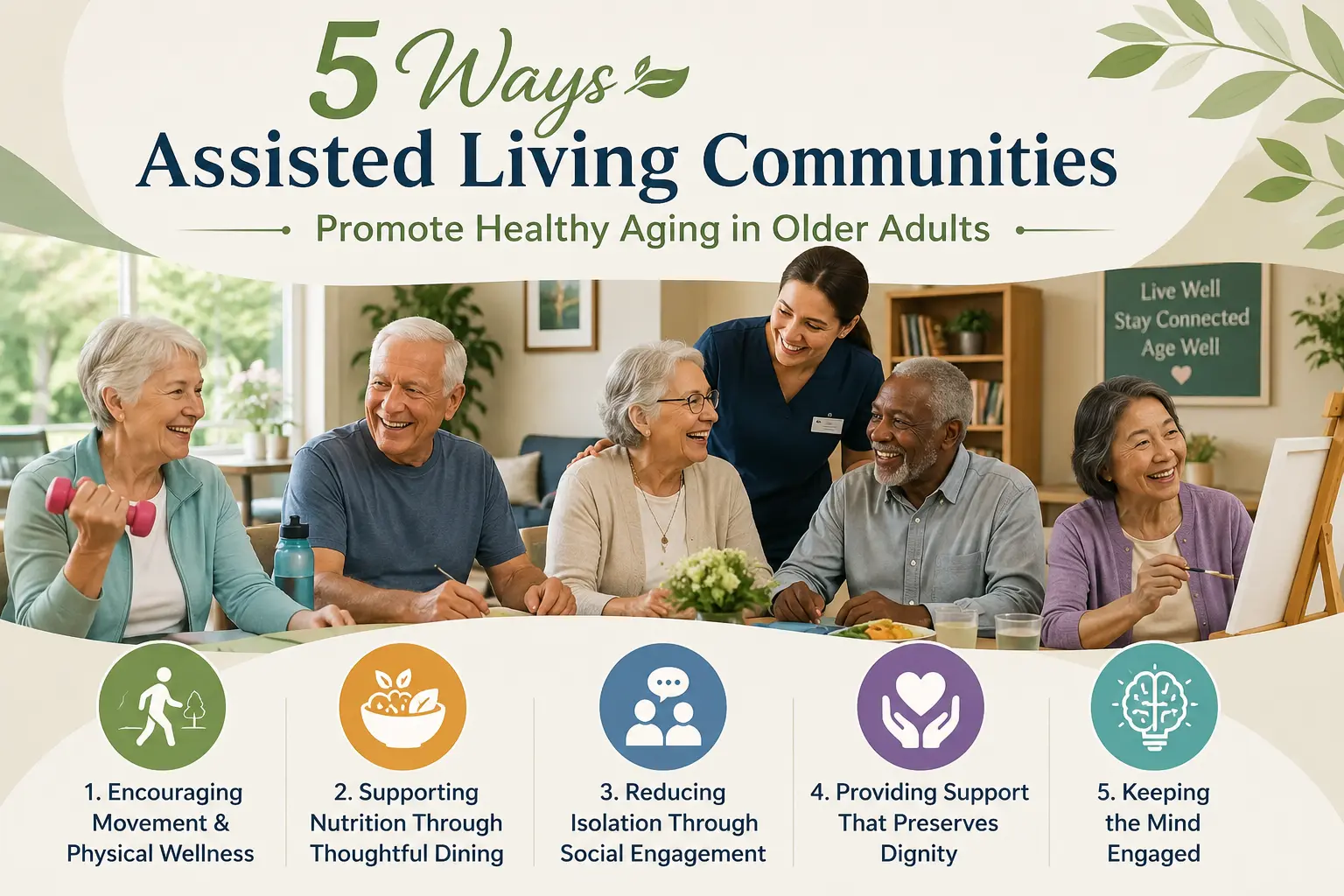
Healthy aging is about more than physical health alone—it involves social connection, mental engagement, and a sense of purpose. Assisted Living communities are structured with these factors in mind, offering residents an environment where daily support and personal choice work together. Rather than limiting independence, this setting often gives residents the resources they need to pursue a fuller, more balanced routine. Here are five ways these communities support healthy aging.
Encouraging Movement and Physical Wellness
Regular movement plays an important role in overall well-being, and Assisted Living communities typically offer a range of options to help residents stay physically engaged. Fitness classes, walking paths, and gentle exercise programs are designed to accommodate different ability levels, allowing each resident to participate at a pace that feels comfortable. Having these options close by removes some of the barriers that might otherwise make regular movement difficult, giving residents more freedom to choose how they spend their time.
Supporting Nutrition Through Thoughtful Dining
Proper nutrition becomes increasingly important with age, and communities that prioritize dining programs help residents maintain healthy eating habits without the burden of grocery shopping or meal preparation. Menus are often developed with attention to dietary needs and personal preference, and residents can choose from a variety of options that suit their taste. Sitting down for a shared meal also provides a social touchpoint throughout the day, turning a basic need into an opportunity for connection.
Reducing Isolation Through Social Engagement
Loneliness can affect both emotional and physical well-being, and Assisted Living communities address this through shared spaces and group programs that encourage interaction. From book clubs to games and group outings, these offerings give residents the chance to build relationships with neighbors who share similar interests. For families researching Assisted Living in Orange, TX, this social structure is often one of the more meaningful benefits of the community setting—residents in Independent Living, Assisted Living, or Personal Care all have regular opportunities to connect with others, which can make a noticeable difference in day-to-day mood and outlook.
Providing Support That Preserves Dignity
Assistance with daily tasks such as dressing, bathing, or medication reminders is available as needed, but it’s delivered in a way that respects each resident’s privacy and preferences. Team members work with residents individually, adjusting the level of support based on what each person actually needs rather than applying a one-size-fits-all approach. This balance allows residents to remain in control of their daily routine while having help available for the tasks that have become more difficult to manage alone.
Keeping the Mind Engaged
Mental engagement is just as important as physical health, and many communities offer life enrichment programs that give residents the chance to learn something new or continue a longtime interest. Art classes, discussion groups, and educational sessions provide mental stimulation in a low-pressure setting, allowing residents to participate as much or as little as they’d like. This kind of ongoing engagement can contribute to a greater sense of purpose and satisfaction throughout the day.
Building a Foundation for Well-Being
Healthy aging looks different for every individual, but the common thread is a setting that supports both body and mind while respecting personal choice. Assisted Living communities bring together movement, nutrition, social connection, dignified support, and mental engagement in a way that allows residents to shape their own path forward. Families exploring options for a loved one may find that these communities offer not just support, but a genuine foundation for a fuller, more connected daily life.